

When Doing the Right Thing Still Upsets People
There is a time to listen and understand, to remain calm and stay connected with others. But even if we do this well, people may still be unhappy with our decisions.
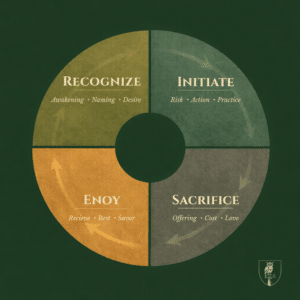
We can do everything right and others may still disagree with our course of action. That is where obedience becomes costly.
The Sacrifice Adam Refused to Make
When Eve offered Adam the forbidden fruit, he was faced with a choice—a sacrifice.
No one had a gun to his head. There were no Herculean challenges to overcome or physical suffering to endure. He simply faced the possibility of conflict with Eve and the disruption of their relational harmony. Apparently, that was a price he was unwilling to pay.
Adam chose to sacrifice obedience in order to preserve approval. In doing so, he avoided immediate conflict with Eve, but his compromise came at a devastating cost for them both.
Jesus Chose Obedience Over Approval
Jesus presents a striking contrast.
He loved deeply, yet He was not governed by the need to be liked.
When His teachings became difficult, He did not dilute them. When Peter insisted that Jesus should avoid Jerusalem and the suffering that awaited Him there, Jesus confronted him directly. Peter wanted what he believed was best for Jesus, but he was viewing things from a merely human perspective rather than God’s.
Jesus was willing to face that conflict head-on.
His correction of Peter was not an act of rejection. It was an act of love. He remained committed to the relationship while also remaining faithful to His mission.
In Gethsemane, Jesus revealed the full cost of that obedience. He prayed that the cup of suffering might pass from Him if possible. Yet just as He refused to be governed by the opinions of others, He refused to be governed by His own desire for comfort.
His obedience was indeed costly. But He chose to sacrifice approval, comfort, and even His own immediate desires in order to remain faithful to the Father.
The Hidden Need Beneath People-Pleasing
The conflicts we face in marriage, friendship, family, and work are often about more than the issue being discussed. At the heart of many conflicts lies a deeper question: Whose approval matters most?
We are relational beings to our core. And naturally, we want to be liked, appreciated, understood, and accepted by those closest to us. There is nothing wrong with these desires.
The problem begins when the approval of others becomes more important than the approval of God. When this happens, we start making decisions based on avoiding disappointment rather than pursuing faithfulness.
We may avoid a difficult conversation with our wife. We may refuse to enforce consequences with our children. We may walk away from a calling others don’t understand. Or we may simply choose the safer path because we fear what people will think.
The issue is rarely the decision itself. The issue is whether we are willing to endure disapproval in order to remain obedient.
Why Faithfulness Requires Disappointment
Love does not stop caring about others. Nor is it an excuse to do whatever we want.
Real love listens. It seeks understanding. It remains connected. But real love is also willing to endure the disappointment of others for a greater good.
And this is why obedience and relationship must remain together. Obedience without relationship becomes harsh. Relationship without obedience becomes appeasement. The challenge is learning to hold both at the same time—even when emotions run high and the pressure mounts.
That is where mature strength is forged.


One Comment