Part of maturity is developing better habits to cope with the demands of life. We soon learn that merely checking out, moments of quick relief, or otherwise keeping ourselves distracted doesn’t allow us to show up for others when it matters. But often we’ve simply settled for disciplined, informed, and productive lives without also becoming the men who have been shaped by the pressures of life. And it’s this inner formation that allows us to count the trials of life as joy because we see how God is refining us for greater glory and impact in his kingdom.
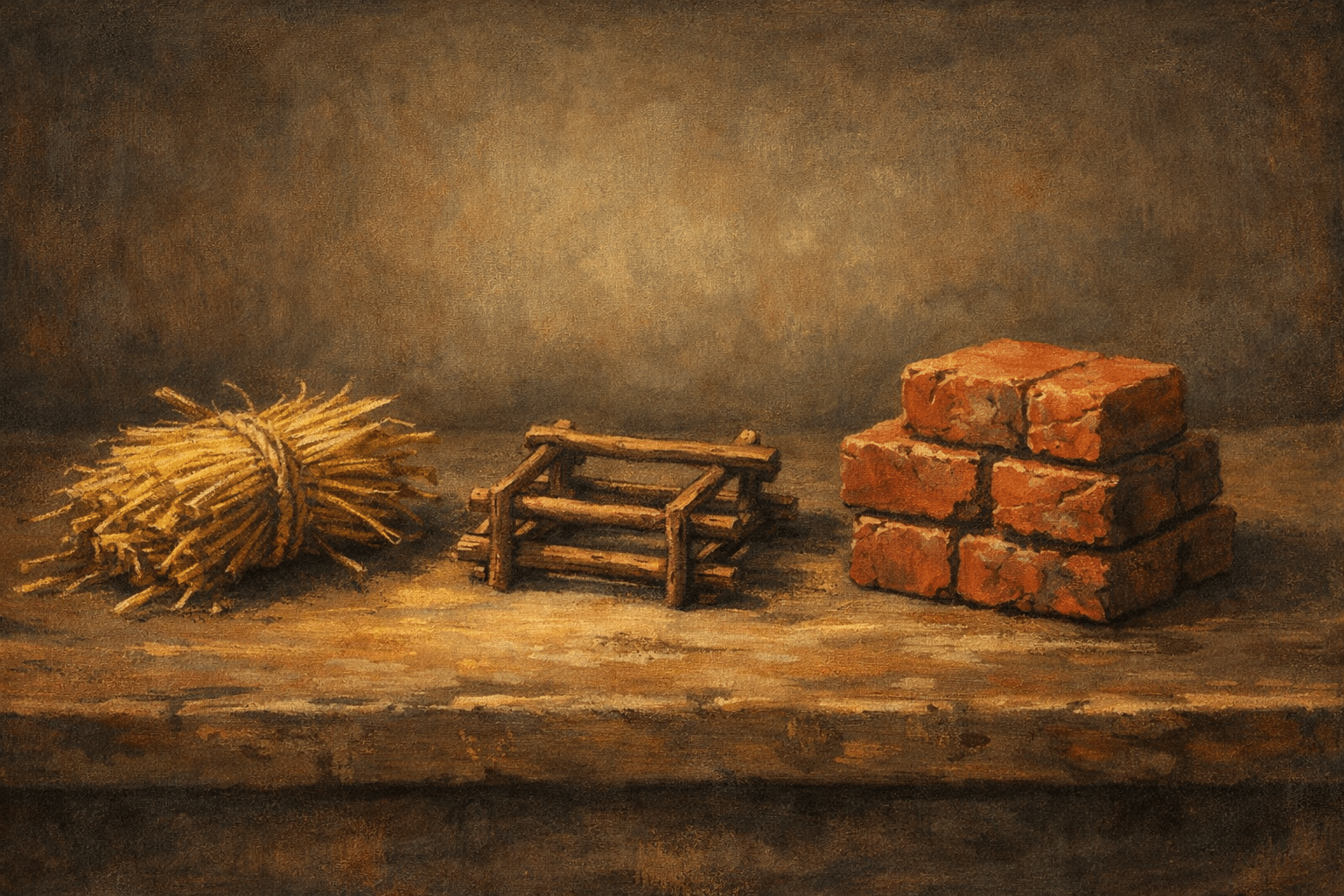
Straw
Of course, there’s a time in which we’re all building our house out of straw – finding whatever momentary relief we can from the burdens of life. While these are not necessarily sinful approaches, they’re not sustainable under the increasing weight of responsibility.
Sticks
In time, we understand and accept the need for more structure. We adopt various routines and disciplines, acquire knowledge, engage in groups, and submit to accountability relationships. We’re now building our house out of sticks, which is much better than the straw.
But these sticks still rely mostly on external support, and we ourselves have not yet been fully formed as men. On the surface, we’re functional and doing everything we’re supposed to do. And this leaves us confused when life heats up and all our good habits still collapse; we cannot show up with love, strength, or presence that makes a difference despite our best efforts.
Bricks
We start to build our house out of bricks when we learn to tolerate discomfort for the sake of growth – staying present in hard conversations, holding desire without the need for immediate expression, staying open to God even when our spiritual life feels disappointing and dry, or the like.
Building with bricks changes us from the inside out. No longer are we simply trying to navigate the storms of life, we’re now being formed by them. The wolf not only doesn’t take us out, he becomes the very substance of our formation.
Perhaps the question is no longer whether you need better habits, but whether you’re being formed into the man who can remain present when it matters. When good habits fail, it’s time to build differently.